
September Lawn and Hedge Work: The Month That Decides Next Spring
September 4, 2026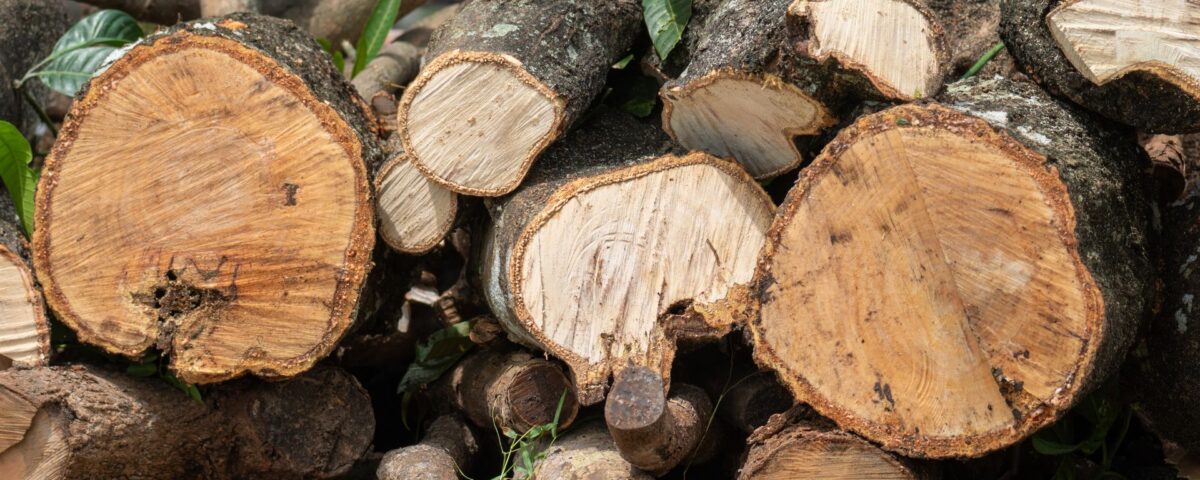
October in the South Hams has two jobs written into it. The first is firewood: if you burn wood, this is the month to get next year’s supply split and stacked while the weather still lets you work outside. The second is storm-readiness: the first named storms usually arrive off the Atlantic before Halloween, and this corner of Devon — all tall hedges, old trees and single-track lanes — feels them first. The same weekend of kit hire covers both.
Splitting logs the sensible way
Anyone who has spent a day swinging a splitting maul knows exactly what it is worth to not do that. Our Log Splitter (from £75 excl. VAT) puts tons of hydraulic pressure through a round of wood and cleaves it in seconds — knotty, twisted pieces included, the ones a maul just bounces off. For splitting up at the woodpile, in a field or anywhere without power, the Petrol Log Splitter (from £90) works wherever the wood fell.
The timing matters more than people think. Freshly felled wood needs a year or more of seasoning before it burns well, and wood seasons far faster split than in the round — more surface area, more airflow. Logs split this October are firewood next winter. Logs left in the round are firewood eventually.
Clearing up before — and after — the wind
October is the month to look hard at what is hanging over your house, your lane and your power line, because the storm season will look at it for you otherwise. Once the saw work is done (and for anything substantial near buildings or lines, that is a job for a professional), the Timberwolf 6 inch Chipper processes the brash where it fell, and our chainsaws and garden range covers the rest of the clear-up.
Seasoning: the numbers that matter
Wood burns properly at under 20 per cent moisture content — and since the rules on wood burning tightened, that number is not just good practice, it is the legal standard for sold firewood and the sensible one for your own. Freshly felled hardwood starts at 45–60 per cent. Split it and the clock speeds up dramatically. Stack it off the ground, bark side up, with the top covered and the sides open to the wind — a South Hams hedge-line breeze is a better drying machine than any shed. A £15 moisture meter takes the guesswork out: split a log and test the freshly exposed face, not the outside. Ash and beech split this month will be ready for next winter; oak wants two years, and rewards the wait.
When the power goes
Rural South Hams knows the drill: the wind gets up overnight, and somewhere between Modbury and Kingsbridge the lights go out. A 6kVa Diesel Generator (from £55) will keep a household’s essentials running — freezer, fridge, lights, the kettle that makes everything feel manageable — and for smaller needs the 3kVa (from £30) does the job. If you run a farm shop, holiday lets or anything with a cold chain, a generator on standby in storm season is not caution, it is arithmetic.
Two habits make a storm generator actually useful rather than theoretically useful. Run it outside, always — never in a garage or porch, however hard it is raining, because exhaust fumes indoors are lethal. And plug in the essentials directly or through a proper lead rather than improvising into the house wiring; anything involving the consumer unit is an electrician’s job, not a storm-night experiment.
Water going where it should not? A 2 inch Submersible Pump (from £25) empties a flooded outbuilding or yard fast, and the 1 inch Puddle Pump (from £15) deals with the shallow standing water that gets left behind.
The storm shelf
Every rural household down here quietly maintains one — the shelf, or the corner of the barn, where the storm things live. Torches and batteries, obviously; a filled water container if you are on a private supply that needs power; phone battery packs kept charged from October. Add to that a note of what you would hire and from where: which generator size runs your essentials (test the theory once, calmly, before you need it), and the knowledge that a pump exists for the yard that floods every second winter. Storm preparedness in the South Hams is mostly not equipment at all — it is having decided things in advance, on a nice day, with the kettle on.
Sort it before the shipping forecast does
Every year, the generator and pump calls all arrive in the same 48 hours — the ones just after the storm. The cheaper, calmer version is the call the week before. Ring 01752 922535 or email hire@olympushiresouthhams.co.uk and we will deliver across Ivybridge, Yealmpton, Salcombe, Kingsbridge and the wider South Hams. The full Tool Hire range is online. Split the logs, clear the limbs, know where the torch is — and let October do its worst.